Inside the ToolBag: What Tools Does a Piano Technician Actually Use?
Inside the Tool Bag: What Tools Does a Piano Technician Actually Use?
When a piano technician arrives for a service visit, they usually carry a surprisingly heavy bag. While many people picture a technician turning up with just a single lever, caring for an acoustic piano—with its thousands of moving parts and roughly 20 tonnes of string tension—requires a wide range of specialised equipment.
The tools inside a technician’s kit generally fall into five distinct categories.
1. Tuning Tools (Adjusting Pitch)
These are the tools used to bring the piano’s 220-plus strings into harmony and stabilise them at concert pitch:
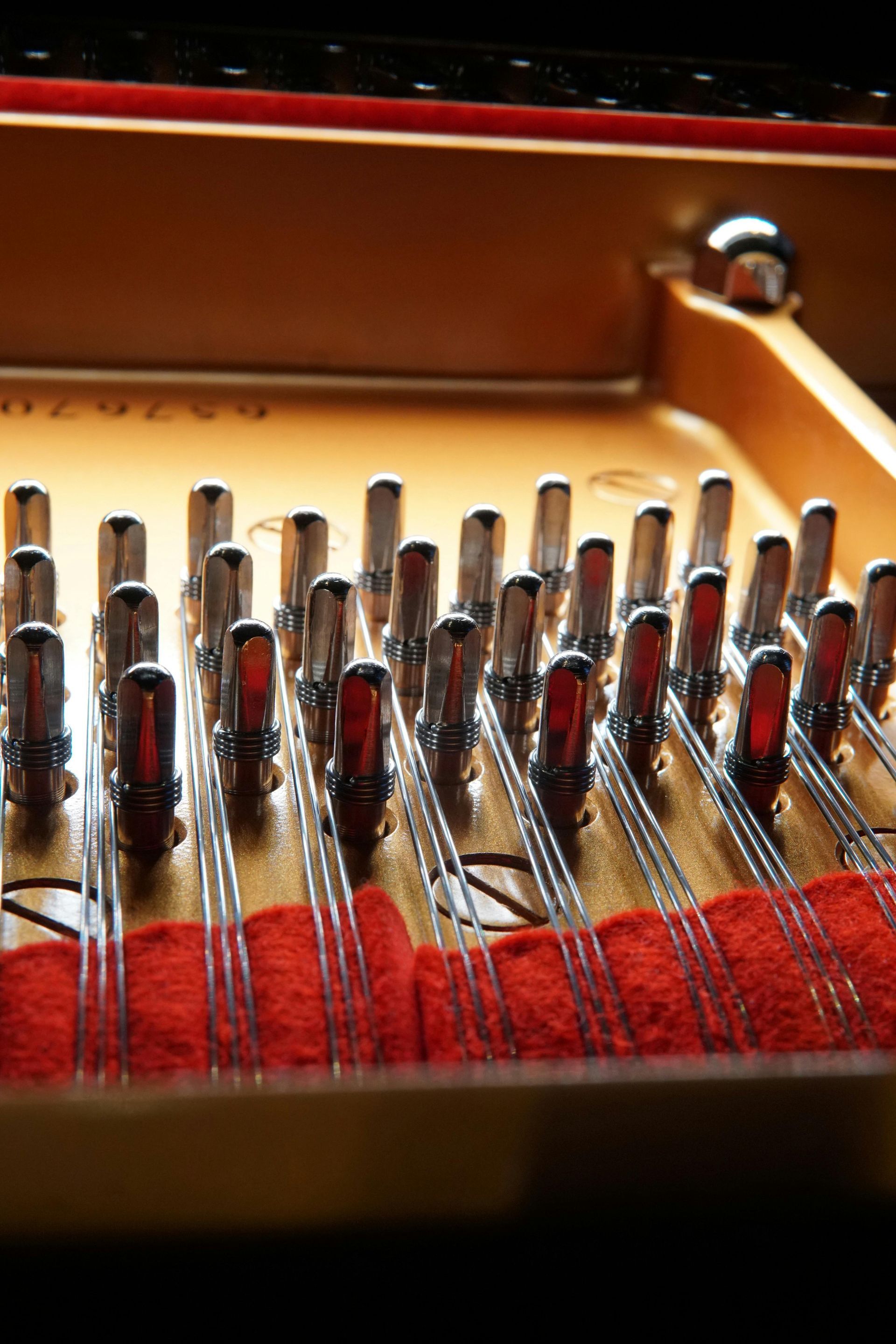
- The Tuning Lever (or Tuning Hammer): The most recognisable tool in the kit. Despite the nickname "hammer," nothing is ever struck. It is a precision handle fitted with a star-shaped tapered tip that grips the steel tuning pins. A snug, properly fitted tip is essential to turn pins smoothly without rounding off the metal or flexing the pin.
- Rubber Wedges, Felt Strips & Papp’s Mutes: Most notes on a piano have two or three strings tuned to the exact same pitch. Mutes are placed between adjacent strings to silence them so the technician can isolate and tune one string at a time.
- Pitch References: Technicians rely on an A440 tuning fork alongside high-precision Electronic Tuning Devices (ETDs) or specialised software. While digital tools help measure pitch accurately and assist during large pitch raises, final unison tuning still relies heavily on a trained ear.
2. Regulation Tools (Adjusting Touch & Feel)
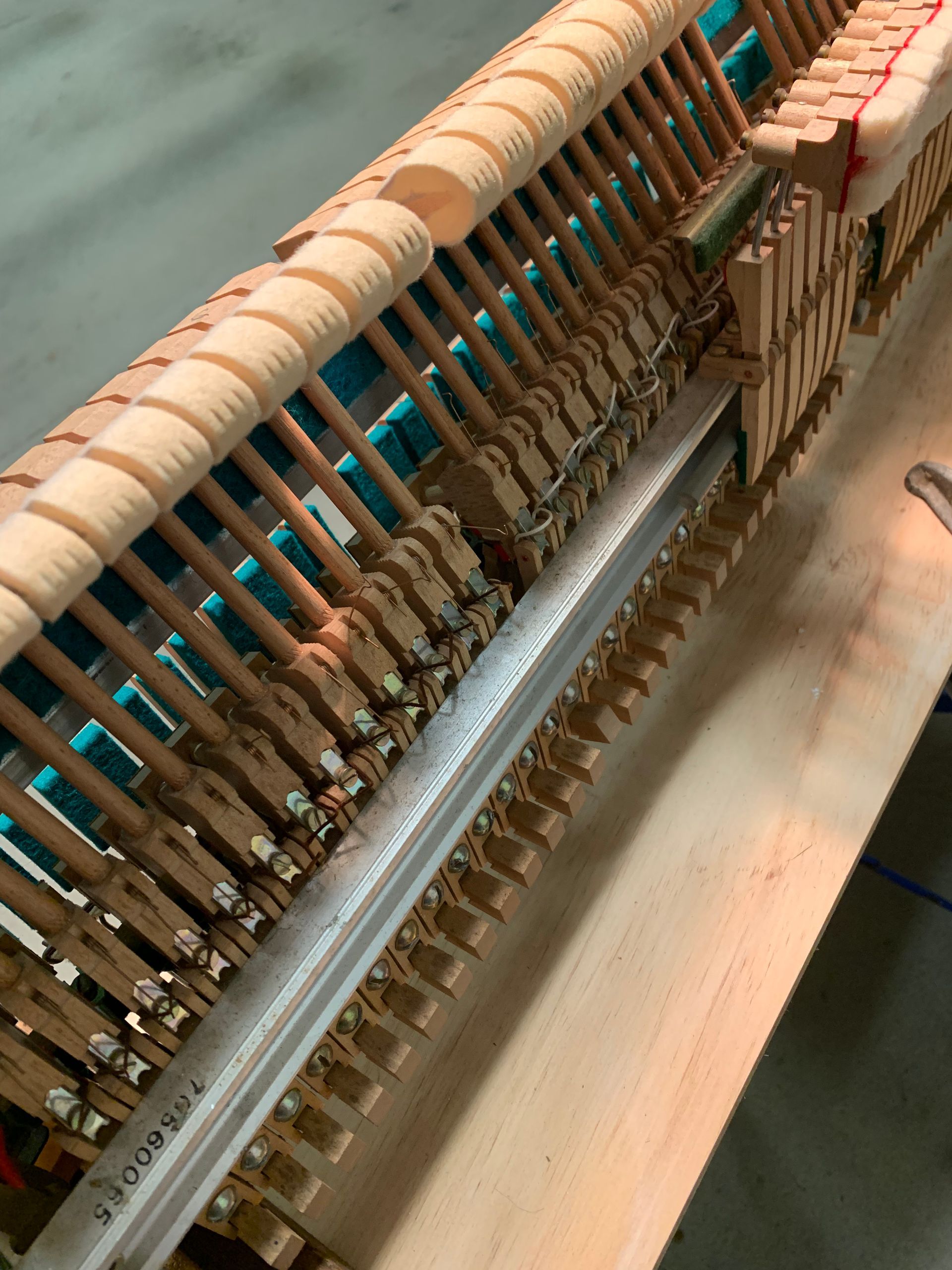
Over time, felt compresses and wooden parts shift slightly with humidity changes, making the keyboard feel uneven or sluggish. Regulation tools allow a technician to adjust the mechanical action so every key responds consistently:
- Capstan Wrenches, Wire Bending Tools & Let-Off Regulators: Slender, angled tools designed to reach deep inside the piano action to adjust how far and what angle a hammer travels before striking the string, when it escapes, and the distance of return (catch).
- Key Easing Pliers & Tools: Used to relieve sticky keys caused by swollen wood or to ensure all 88 keys sit at a uniform height.
- Damper Spoon Benders & Wire Pliers: Specialised bending tools that fine-tune the timing of the dampers and keys—ensuring notes stop ringing cleanly the moment you lift your finger.
- Various Gauges and Dip Blocks: For setting the correct distances and weights of the piano's action parts.
3. Voicing Tools (Shaping Tone)
If a piano sounds overly harsh and metallic—or dull and muffled—the issue is usually the density of the wool felt on the hammers. Voicing tools alter the tone without changing the pitch:
- Voicing Needles: Multi-needle tools inserted carefully into specific sections of the hammer felt to relieve tension and create a warmer, sweeter tone.
- Hammer Files & Sanding Paddles: Used to gently reshape grooved, worn hammer heads back into a smooth oval profile so they strike all strings evenly.
4. Stringing Tools
Specialised tools required for replacing strings:
- String Hooks, Coil Lifters and Setters: Used to grab the string and set the height and tightness of the string coil at the pin.
- Coil Maker: A tool used to create a coil in a string prior to placing in the piano.
- T-Hammer, Ratchet Lever: Tools required to turn the pin while holding the string steady to pull into place.
- Bass String Setter and Bridge Pin Punches: Tools used to set the twist in a Bass String and to punch down the string against the bridges and hitch pin.
- Cutters & Vicegrips: For cutting and bending music wire into the correct shape and length. For example when making loops.
5. Diagnostic, Cleaning & Repair Tools
Routine maintenance also calls for an assortment of precision repair and diagnostic gear:
- Torque Wrenches: Used during inspections of older pianos to measure how tightly the tuning pins are gripped by the wooden pinblock.
- Micrometers & Rules: For measuring the diameter & length of music wire and distances for regulation.
- Hammers, Screwdrivers, Pliers, Punches: Used to undo components, drive in pins, set strings and grip objects.
- Spring Hooks, Tweezers & Magnetic Pickups: Essential for hooking tiny repetition springs back into place or retrieving a dropped screw from deep beneath the keys.
- Various Types of Glues and Clamps: For repairing broken wooden parts, loose and missing felts and leather parts and keytops.
- Soft Brushes, Soundboard Sweepers & Micro-Vacuum Attachments: Used to safely clear built-up dust from the soundboard and delicate action components without damaging fragile parts.
- Scissors, Knives and Blades: For cutting felt and leather for repairs.
- Specialised Oils, Graphite & Teflon Powder: For lubricating the piano's action parts to keep them moving freely.